Tuesday, December 27, 2005

Quotes # 5


“Leadership and learning are indispensable to each other.”

John F. Kennedy, speech prepared for delivery in Dallas the day of his assassination, November 22, 1963

Thursday, December 22, 2005

Strategy? Planning?Thinking? Long term ?


I see a major difference between conventional long term planning and Strategic planning as the first one is build on projection and extrapolation of data and experiences from the past, while Strategic planning builds on anticipated future trends and competitive assumptions. Conventional long term planning tends to be numbers driven, while on other hand Strategic planning is focusing on providing a clear organizational vision and is more qualitative rather than quantitative.

I am always ready to learn, but I do not always like being taught. "Sir Winston Churchill "

Tuesday, December 20, 2005

Quotes # 4

"Thoughts are the seed of action."
Ralph Waldo Emerson
US essayist & poet (1803 - 1882)

Friday, December 16, 2005

What are the key elements of a strategic plan? (Part 2)

What is strategy after all? If You search for the term in google you will find 456.000.000 results.
In my opiniom one of the most comprehensive definition is the one provided by Arnoldo C. Hax and Nicolas S. Majluf :
"determines and reveals the organizational purpose in terms of long-term objectives, action programs, and resource allocation priorities;
selects the businesses the organization is in, or is to be in;
attempts to achieve a long-term sustainable advantage in each of its businesses by responding appropriately to the opportunities and threats in the firm's environment, and the strengths and weaknesses of the organization;
identifies the distinct managerial tasks at the corporate, business, and functional levels;
is a coherent, unifying, and integrative pattern of decisions;
defines the nature of the economic and non-economic contributions it intends to make to its stakeholders;
is an expression of the strategic intent of the organization;
is aimed at developing and nurturing the core competencies of the firm;
is a means for investing selectively in tangible and intangible resources to develop the capabilities that assure a sustainable competitive advantage."

Thursday, December 15, 2005

What are the key elements of a strategic plan? (Part 1)

What happens if a manager wants to see beyond how his business is performing today?

Measures like; revenue, profitability, market share and customer satisfaction are only a Photograph of the actual position that company is in.
But those measures can not point us the path to the future, in a constantly changing business environment, the above measures only tell us how well / bad the business has performed in the past.
To overcome this situation creative leaders should focus on more than just documentation driven strategic planning, this process should be much more based on one to one conversations, listening to others opinions, be more motivational for everybody involved in the process, seeking voluntary commitment, it should contain strong creative elements instead of being just analysis driven, focusing on the big picture than rather on details.
Strategic planning should be mainly about setting a direction rather than segmenting and budgeting, it should be aligning and inspiring people rather than organizing and staffing.

Monday, December 05, 2005

Quotes # 3

I find television very educating. Every time somebody turns on the set, I go into the other room and read a book.
Groucho Marx

Participation ( Part 1 )

An effective business strategy development, is a creative team process, that depends on a very high level of collaboration and participation among members throughout a business organization. The team responsible for implementing changes in their business unit should be involved in shaping and deciding the strategy from scratch.
To make the most of the workflow of expertise and ideas that other colleagues in their organizations possess, creative leaders need to stop from presenting their solution to a problem before others have had an opportunity to offer their own insights and thoughts.
Leaders must understand that the best options mean very little if different parts of the organization are not willing to cooperate to execute the decision.

Tuesday, November 29, 2005

Quotes # 2

"Coaching is unlocking a person's potential to maximize their own performance. It is helping them to learn rather than teaching them..." -- Timothy Gallwey,

Tuesday, November 22, 2005

Leading versus Managing ( Part 4)

A leader inspires his followers by appealing to their common sense rather than resting on his formal authority.
A leader fosters hope rather than fear;
A leader says “we” rather than “I”;
He does "it" instead of talking about "it ";
A leader do not need to ask for respect, Followers willingly respect him.

Friday, November 18, 2005

What drives employees ? ( Part 1 )

J.W. Atkinson: “achievement is 50% ability and 50% drive”

To a certain degree each person has specific needs, drives and ambitions.
Once satisfied basic needs according to Maslow´s pyramid, there are some “extra” needs that enables employees to be ready to contribute above and beyond their call of duty.
Most of these needs , as well as aspirations and expectations are unexpressed and here is where a creative leader has to develop some kind of a detecting mechanism that enables him to better recognize and understand these “ extra wishes “.and aim to respond at them as we do in regards to satisfying our customers needs.
A first step could be not to brand people under a generic category of “employee”, but to treat them as human partners.
We must recon them as human beings with individual needs, drives, characteristics and aspirations.
Changing habits involves both knowing how (learning) and wanting to (motivation). It is important to see that learning is different from performing.
In terms of how far we get in life--how much we accomplish--motivation may be just as important if not more important than learning. A common barrier to accomplishing many goals in life is not wanting the goal enough to give it the necessary try, therefore it is vital to coach our “human” business partners by giving the necessary confidence boost providing them with sufficient quality time, energy attention, help advice, mentoring and support.

Thursday, November 17, 2005

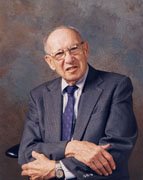
Farewell, Peter Drucker: A Tribute to a great visionary


"With the passing of Peter Drucker, the world has lost one of its intellectual giants," says Yoram (Jerry ) Wind , director of the SEI Center for Advanced Studies in Management at Wharton.


"Management is so much more than exercising rank and privilege, it's so much more than 'making deals.' Management affects people and their lives, both in business and many other aspects as well. The practice of management deserves our utmost attention; it deserves to be studied."
Peter Drucker

Wednesday, November 16, 2005


This book brings competitive advantage under a new light.

Friday, November 04, 2005

Quotes # 1

Building a deep capacity for strategy innovation requires a company to imbue its employees with new passions, as well as new skills. It requires a never-ending effort to engage and capture the imagination of every single individual. It requires that top management surrender its monopoly on setting strategic direction. It requires a relentless quest to bring profoundly new benefits to customers. It requires allegiance to new financial measures that focus attention on the challenge of creating new wealth. It requires a relentless search for new business concepts. It requires the total absence of nostalgia for old business concepts. It requires a relentless attack on anything that inhibits innovation. It requires that companies encourage and celebrate activism at all levels. It requires companies to create vibrant internal markets for innovation, capital and talent. “Gary Hamel”

Wednesday, October 12, 2005

Leading versus Managing ( Part 3)

The vital issue when analysing the key differentiating points between leadership and management is the theory that employees willingly follow leaders because they want to, not because they have to.
A leader may not have the formal authority to reward good or to penalize poor performance , but followers provide leaders with real power by attending their requests.
Managers on the opposite side, may have to use their formal authority to get their reports to perform accordingly.
In modern companies the persons who are the key driver achieve authority through, and only through, their success.

Monday, October 10, 2005

Leading versus Managing ( Part 2)

Managers have to deal with complexity, they handle it, by bringing order into a situation and predicting its outcome. But, to succeed in times of uncertainty and turbulence, those tasks are no longer enough. Nowadays companies are desperately trying to adapt themselves to a rapidly and constantly changing business environment. To achieve this, managers have to learn how to manage change, or, how Professor John F. Kotter, Konosuke Matsushita Professor of Leadership at Harvard Business School expressed; they have to lead change.
The question that managers facing change have to ask is:
What do I need most “ to develop more Leadership or more Managing skills ?
What are the crucial distinctive elements on both definitions?
1. Management involves planning and budgeting. Leadership involves setting a direction.
2. Management involves organizing and staffing. Leadership involves aligning and inspiring people.
3. Management provides control and problem solving skills. Leadership drives motivation.
The challenge is to know when to be a leader and when to be a manager,
Both skill sets—management and leadership—are needed to achieve organizational goals. Managers typically take care of the inner-workings of the business. They design systems, create rules and procedures and oversee daily operations.
Leading involves motivating and inspiring people, both directly or indirectly. Leaders are often seen as collaborative, visionary and tuned with the needs of their staff. Leaders have a high level of personal involvement in a company or project. They are able to set the tone with their behavior and attitude (leading by example) and influence decisions (credibility and power).
Sometimes, however, we must wear both hats , the one of a leader and the one of a manager . "we may be in a leadership position, but we still need to manage every day if we want to stay profitable and keep a our stakeholders satisfied.

Friday, October 07, 2005

Leading versus Managing ( Part 1)

Strategic Leaders provide their followers with general guidelines, just as The Prussian Marshal Helmuth von Moltke (1800 - 1891) did , by promoting directives to his officers rather than commands .
Moltke wanted to foster entrepreneurship among his ranks by motivating Prussian officers to practice autonomous decision making .
Great entrepreneurs create a corporate culture in which their vision, core values and business strategies are lived by employees who think independently.
In an Harvard Business Review article, Hans Hinterhuber and Wolfgang Popp translate Moltke's example into business terms. According to Moltke, strategy should mean; applied common sense and is a skill that cannot be taught.
Both authors suggest that good entrepreneurs and managers—as Moltke did with his generals--are born with the qualities that make them successful.
But, potential is not everything, like top athletes, in order to become a champion one has to constantly and continuously work and develop this natural ability.
Hinterhuber and Popp have created a questionnaire that can help potential strategic leaders to measure their own strategic management competence.

Here are the questions that can guide you trough your introspectional process and, hopefully, provide food for thought.
1. Do you have an entrepreneurial vision for your company and your business unit/department within it?
2. Do you have a clear sense of the corporate philosophy and the role that you play in it?
3. Do you feel your product, service or brand offers your customer a unique competitive advantage ?
4. Do the people who report to you use their ability to act independently in the company's best interest, without too much micromanaging on your part?
5. Does the department/business unit you manage reflect your own vision?
6. Do you involve your direct reports/followers in strategic planning?
7. Are the core values in your department/business unit compatible with these strategies?
8. Do you monitor the external competition closely and try to learn new things from them?
9. Do you feel that your success has been due to hard work rather than luck?
10. Are you trying to leave the world a better place than how you found it?

Friday, August 12, 2005

Be a Change Agent ( Part 2)

Leadership starts with ourselves, you were not born with (at least that is my theory) it is a skill that you develop overtime by learning from you mistakes, your habits and ultimately it is the showroom of your character.
It is your actions, your ethical behaviour your creativity, your beliefs that shape organizations.
Leadership is primarily a relationship between people and this relationship to be successful must be built on trust.
Trust is something that you foster and strengthen with time by living the values that you believe in.
The golden rule of leadership is providing the example by living what you preach,
Leading by doing what you mean.
Leadership based on mutual trust should be everyone’s business, and be applied not only to the financial world but also in our daily actions in our social and private environment.
Leadership is about the ability to motivate others to achieve common objectives.
If we want this world to become a better one, than leadership starts with ourselves we all take full responsibility for doing what we say we will do.
It is an important first step to reinstall credibility in our financial, political and social institutions.

Friday, August 05, 2005

Be a Change Agent ( Part 1)

Aligning business organizations to be successful in the present and keep on doing this in the future means to develop a new style of Leadership.
To celebrate success in our days a leader must be able to craft a strategic vision, define objectives, design, implement and monitor the execution of a strategy and be a change leader in those same organizations.
The success of these change initiatives depends largely on leadership and each leader’s ability to not only face change but to welcome it and facilitate it. In addition, leaders must ensure that those who work for them will not only accept the change but embrace it.
Most change initiatives focus on the operational and processing aspect.
What managers too often ignore is the human side – the humanistic aspect of change. Anyone who has ever attempted to implement a change of any kind has experienced some kind of resistance by people in the organizations.
Therefore it is vital to make the change project, their project as well as yours.
The only way to give people a sense of ownership is to involve them make them believe that this is primarily their project and that the expected outcome will benefit them in may ways.
To achieve this You have to take in consideration some basic rules:
2 way communication; it is important to listen to each others ideas and thoughts
To show respect: Everybody participating in a team must have respect for each other.
Treat others the same way You want others to treat You.
Involvement in the change process, make sure that everybody is able to participate with thoughts and ideas in most of the decisions that have to be taken.
Share best practices expertise and allow that everybody learn with each other, provide feedback, by ensuring that people are committed to the aims of the change process; be sure to pass around any favourable feedback. Communicate, send out emails - anything, just make sure that everybody hears the good news.
And last but not least; have fun. Team members should be able to have fun together. It can be amazing how productive a good laughter can be. It improves motivation, increases moral, team Spirit and performance.

Wednesday, July 20, 2005

The Power of vision ( Part 4)

The vision statement of an organization must be a shared vision. The purpose of the vision statement is, after all, to thrive for action and achieve results, not to have a nice piece of poetry . If a vision statement is to paint a vivid picture of how the future will look like, and impel for action, then the leader ,and others in management positions, must communicate it broadly, consistently, and continuously, until it becomes an integral part of the organization's culture and values . It takes every public and corporate opportunity, in speeches, management meetings, articles, and interviews, presentations, press releases to publicize this core message.
Vision, is not simply a matter of a written statement , but a constant roar , that should be echoing everywhere and on every occasion.
A vision statement is build up with words, that have a meaning , are understand by everybody in the organization and are backed up by action, beliefs, motivation and behaviours.